A.I. : Curse Or Boon?
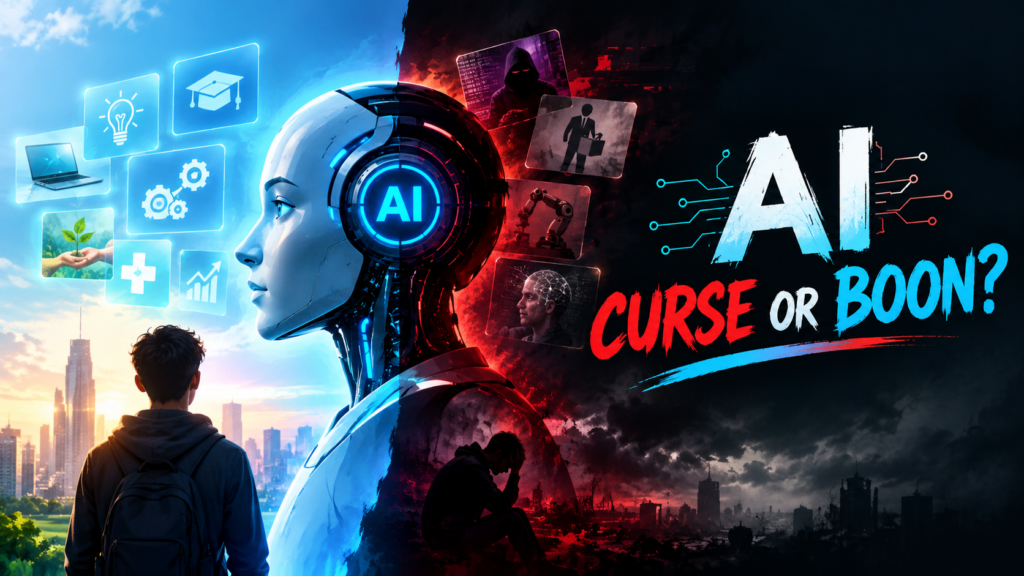
Artificial Intelligence (AI) is one of the most revolutionary technologies of the 21st century. From voice assistants like Siri and Alexa to self-driving cars and advanced medical diagnosis systems, AI is transforming the way we live and work. However, with its rapid growth, a common question arises: Is AI a curse or a boon?
What is AI?
Artificial Intelligence refers to the ability of machines and computer systems to perform tasks that normally require human intelligence. These tasks include learning, reasoning, problem-solving, decision-making, and understanding language.
AI as a Boon
1. Increased Productivity
AI automates repetitive tasks, allowing businesses and individuals to save time and focus on more important work. This increases efficiency and productivity across industries.
2. Better Healthcare
AI helps doctors detect diseases earlier, analyze medical reports faster, and improve treatment accuracy. It is playing a crucial role in saving lives.
3. Improved Education
Students can access personalized learning experiences through AI-powered educational platforms. AI tutors help learners study at their own pace.
4. Innovation and Growth
From smart cities to advanced robotics, AI drives innovation. Businesses use AI to develop better products, improve customer experiences, and create new opportunities.
5. Enhanced Daily Life
AI powers navigation apps, recommendation systems, virtual assistants, and smart home devices, making everyday life more convenient.
AI as a Curse
1. Job Displacement
Automation may replace certain jobs, especially repetitive and routine-based roles. This creates concerns about unemployment and workforce adaptation.
2. Privacy Concerns
AI systems collect and analyze large amounts of personal data. If not handled responsibly, this can threaten user privacy and security.
3. Spread of Misinformation
AI-generated content can be used to create fake news, deepfakes, and misleading information, making it difficult to distinguish truth from fiction.
4. Ethical Challenges
Questions about bias, fairness, and accountability arise when AI systems make decisions that affect people’s lives.
5. Dependence on Technology
Excessive reliance on AI may reduce human decision-making skills and increase vulnerability to technological failures.
Finding the Balance
AI itself is neither good nor bad. Like any powerful tool, its impact depends on how humans use it. Responsible development, ethical guidelines, proper regulations, and continuous education can help maximize AI’s benefits while minimizing its risks.
Conclusion
AI is more of a boon than a curse when used responsibly. It has the potential to improve healthcare, education, business, and daily life while solving complex global challenges. However, society must address issues such as privacy, job displacement, and ethical concerns to ensure that AI remains a force for positive change.
As we move into the future, the real question is not whether AI is a curse or a boon, but how wisely we choose to use it.
Table of Contents
Toggle