Illiteracy In India
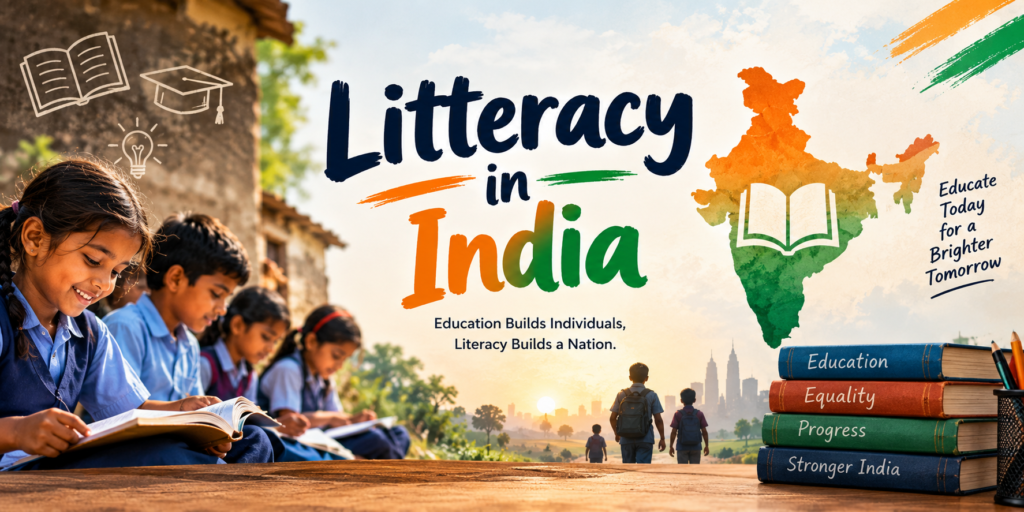
Illiteracy in India: A Challenge to National Development
Introduction
Education is the foundation of a nation’s progress. It empowers individuals, improves living standards, and contributes to economic growth. Despite significant advancements in education over the years, illiteracy remains a major challenge in India. Millions of people, especially in rural and underprivileged areas, still lack basic reading and writing skills. Illiteracy not only affects individuals but also hinders the overall development of the country.
What is Illiteracy?
Illiteracy refers to the inability of a person to read, write, and understand simple information. An illiterate individual often struggles to access education, employment opportunities, healthcare information, and government services.
Causes of Illiteracy in India
1. Poverty
Many families cannot afford educational expenses such as books, uniforms, and transportation. As a result, children are often forced to work instead of attending school.
2. Lack of Educational Infrastructure
In several rural areas, schools are either unavailable or lack proper facilities, qualified teachers, and learning resources.
3. Gender Inequality
In some communities, girls are still denied educational opportunities due to traditional beliefs and social barriers.
4. Child Labor
Many children leave school at an early age to support their families financially, leading to high dropout rates.
5. Lack of Awareness
Some parents do not fully understand the importance of education and therefore do not encourage their children to attend school regularly.
Effects of Illiteracy
1. Unemployment and Poverty
Illiterate individuals often have limited job opportunities and lower earning potential, which can trap families in poverty.
2. Poor Health Awareness
People who cannot read may struggle to understand medical instructions, health guidelines, and nutritional information.
3. Social Inequality
Illiteracy contributes to social exclusion and limits participation in community and national development.
4. Slower Economic Growth
A less educated workforce reduces productivity and innovation, affecting the country’s economic progress.
5. Limited Access to Technology
In today’s digital world, literacy is essential for using technology effectively. Illiterate individuals often face difficulties accessing digital services and information.
Government Initiatives
The Government of India has launched several programs to improve literacy rates, including:
- Sarva Shiksha Abhiyan (SSA)
- Right to Education (RTE) Act
- National Literacy Mission
- Beti Bachao, Beti Padhao
- Digital Literacy Programs
These initiatives aim to make education accessible and affordable for all citizens.
Solutions to Reduce Illiteracy
- Improve educational infrastructure in rural areas.
- Promote adult education and literacy programs.
- Increase awareness about the importance of education.
- Provide financial assistance and scholarships for needy students.
- Encourage equal educational opportunities for girls and boys.
- Strengthen efforts to eliminate child labor.
Conclusion
Illiteracy is one of the biggest obstacles to India’s social and economic development. Although the country has made remarkable progress in increasing literacy rates, much work remains to be done. Education is not just a basic right; it is a powerful tool for transforming lives and building a stronger nation. By ensuring quality education for every citizen, India can overcome illiteracy and move towards a brighter and more prosperous future.
Table of Contents
Toggle