Social Media Marketing
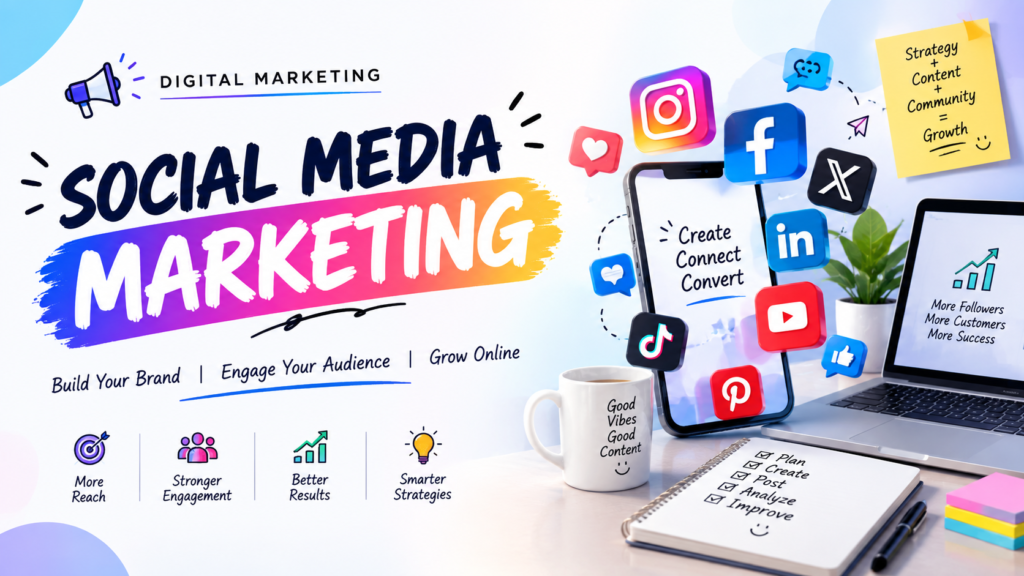
Social Media Marketing: Build Your Brand and Grow Online
Category: Digital Marketing 
In today’s digital world, social media has become much more than a place to share photos, videos, and personal updates. It has become a powerful platform for businesses to connect with customers, build brand awareness, generate leads, and increase sales. This is where social media marketing plays an important role.
Whether you are a small business owner, content creator, freelancer, startup, or established brand, having a strong social media presence can help you reach the right audience and grow your business online.
What Is Social Media Marketing?
Social media marketing is the process of promoting a business, product, service, or personal brand through social media platforms.
It involves creating valuable content, engaging with followers, building a community, running paid advertisements, and analyzing performance to improve results.
Popular platforms include Instagram, Facebook, YouTube, LinkedIn, Pinterest, and TikTok. However, you don’t necessarily need to be active on every platform. The best strategy depends on where your target audience spends their time.
Why Is Social Media Marketing Important?
One of the biggest advantages of social media marketing is its ability to connect brands directly with their audiences.
Traditional advertising often communicates in one direction. Social media allows businesses to have conversations with customers, answer questions, receive feedback, and build relationships.
Here are some major benefits:
• Increases brand awareness: Consistent content helps people recognize and remember your brand.
• Builds customer relationships: Regular interaction creates trust and loyalty.
• Generates leads: Social platforms can direct potential customers toward websites, landing pages, or products.
• Supports sales: Strategic content and advertising can influence purchasing decisions.
• Provides valuable insights: Analytics help businesses understand what their audience likes and responds to.
How to Create an Effective Social Media Strategy
Successful social media marketing isn’t simply about posting every day. It requires planning and consistency.
1. Know Your Target Audience
Before creating content, understand who you’re trying to reach.
Consider their age, interests, problems, preferences, and online behavior. When you understand your audience, it becomes easier to create content that feels relevant and useful.
2. Set Clear Goals
Your social media strategy should have measurable objectives.
For example, you might want to increase followers, improve engagement, generate website traffic, collect leads, or increase sales.
Clear goals help you measure whether your strategy is actually working.
3. Create Valuable Content
Content is the foundation of social media marketing.
Depending on your audience and platform, you can create educational posts, short-form videos, tutorials, behind-the-scenes content, customer stories, polls, carousels, and entertaining posts.
A good content strategy usually balances education, entertainment, inspiration, and promotion.
Instead of constantly selling, focus on providing value and building a relationship with your audience.
4. Stay Consistent
Consistency helps keep your brand visible.
Create a content calendar and decide what you will post, when you will post, and which platform you will use. Consistency doesn’t mean posting dozens of times every day. It means maintaining a realistic schedule that you can follow.
5. Engage With Your Audience
Social media is about being social.
Reply to comments, answer messages, respond to questions, and encourage conversations. Engagement shows your audience that there are real people behind your brand.
Strong communities are often built through genuine interactions rather than promotional posts alone.
Organic vs. Paid Social Media Marketing
Social media marketing generally includes two approaches: organic and paid marketing.
Organic marketing involves creating and sharing content without directly paying for distribution. It focuses on building an audience naturally through valuable content and engagement.
Paid social media marketing involves running advertisements to reach specific audiences. Businesses can use paid campaigns to promote products, generate leads, drive website traffic, or increase conversions.
A combination of both approaches can create a stronger overall strategy.
Measure Your Results
Posting content without checking performance can make it difficult to improve.
Use platform analytics to track metrics such as reach, impressions, engagement, follower growth, clicks, leads, and conversions.
Look at which posts perform best and identify patterns. Then use those insights to improve your future content.
Final Thoughts
Social media marketing is no longer optional for many modern businesses—it is an important part of building a digital presence.
The key to success isn’t simply having thousands of followers. It’s about reaching the right audience, providing valuable content, building trust, and creating meaningful relationships.
Start with a clear strategy, stay consistent, experiment with different content formats, and use analytics to learn what works.
Create. Connect. Engage. Grow.
With the right approach, social media can become one of your most powerful tools for building a successful brand online.